 由 jingzhang

According to information on SoftBank Group’s official website, the Group and OpenAI announced on November 5 the formal establishment of a joint venture named SB OAI Japan GK. In a statement, SoftBank stated that SB OAI Japan aims to provide “Crystal Intelligence” solutions, leveraging artificial intelligence technology to revolutionize the management and operational models of Japanese companies. The product is scheduled to officially launch in 2026.
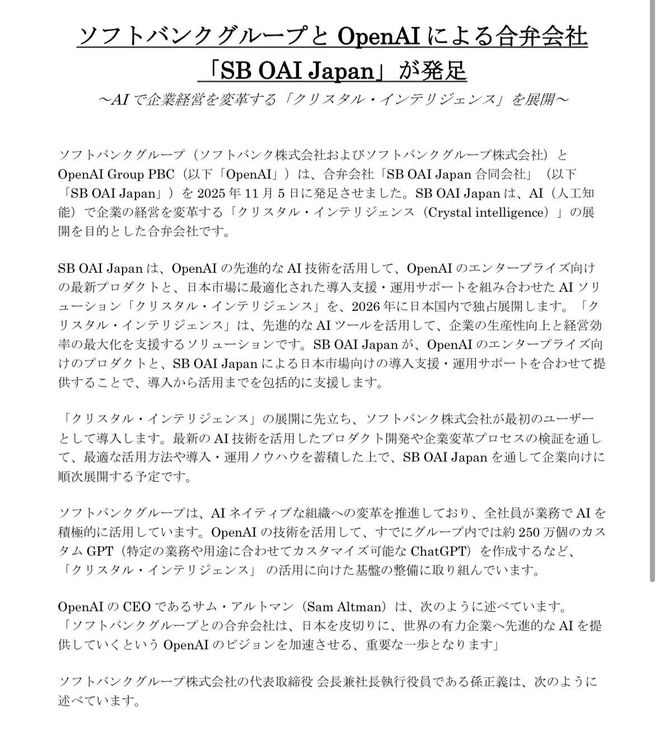
OpenAI CEO Sam Altman stated in the declaration: “Forming this joint venture with SoftBank Group will accelerate OpenAI’s vision of providing advanced AI technology to leading global enterprises, starting with Japan. This is an important step in advancing that vision.” SoftBank Chairman and CEO Masayoshi Son stated that an era of revolutionizing how people work and how companies operate is about to begin. “We will push the AI revolution to a new stage together with OpenAI,” he said.
Connect take rate to the services the platform actually provides
A marketplace share is easier to sustain when creators can see the value behind it: distribution, payments, moderation, AI generation, analytics and customer support. If the platform adds little incremental demand, the same percentage will feel much more expensive. Cost attribution helps show which services are genuinely driving platform expense and which ones create leverage as volume grows.
Plan for refunds and disputes before accelerating payouts. Creator revenue can reverse after a payout due to chargebacks or refunds. Reserve balances, delayed settlement for risky transactions or future-period adjustments can absorb those reversals without making the ledger opaque.
The system should make correction entries visible instead of silently changing past totals.
Track contribution margin after creator share
Gross marketplace volume is not a useful profitability metric on its own. Measure net revenue after creator payout and variable serving cost to understand which products and creator cohorts actually contribute to platform economics. Model creator economics from the transaction level up.
A marketplace should be able to reconcile fan spending, refunds, payment fees, platform share, affiliate share and creator payout for each revenue type. The headline take rate is only meaningful when the underlying revenue base is defined consistently. Different products may also carry different serving costs. Personalized video, text subscriptions and one-off digital goods should not automatically use the same margin assumptions simply because they appear under one creator account.
Working capital is part of the payout design
Payout timing changes both creator experience and platform cash needs. Faster settlement can improve creator trust, but it reduces the time available to absorb refunds, chargebacks or delayed payment collection. Reserve policy and payout cadence should therefore be designed together rather than treated as separate finance decisions.
Measure creator retention together with margin. A high platform take rate can improve short-term gross margin while weakening creator supply. Track creator activation, retained earnings, payout disputes and long-term revenue alongside marketplace margin so the structure remains competitive and sustainable.
Separate guaranteed economics from variable upside
Creator advances, minimum guarantees and promotional subsidies can accelerate supply, but they create a different risk profile from ordinary revenue share. Finance teams should track how quickly guaranteed amounts are recouped and whether the creator generates incremental revenue after the guarantee period. Recoupment rules should be understandable to creators and should distinguish gross fan spending from the revenue actually eligible for recovery.
Build transparent payout reconciliation. Creators should be able to see pending, confirmed, refunded and paid amounts by period. Clear statements reduce support load and make unusual adjustments easier to explain.
The platform should also preserve the rule version used for each payout so later changes to fees or splits do not rewrite historical economics.
Use cohorts to test marketplace quality
Compare creators by acquisition source, audience size, content type and time since launch. This reveals whether growth comes from durable creator businesses or from a small number of heavily subsidized accounts. Practical finance check.
Before acting on the metric described above, define the decision it is supposed to support and the operating assumptions behind it. Compare the forecast with actual user behavior, payment timing and serving cost so changes can be traced to real drivers. Scenario ranges are usually more useful than one precise projection when usage, collections or infrastructure cost remain uncertain.
 admin