 由 admin
Enterprise data buyers often mistake privacy-preserving collaboration for a simple per-query infrastructure product. The real commercial problem is allocating costs among the party who owns the data, the party who launches analysis and the party who pays. This article develops a reproducible pricing ledger, a clearly hypothetical contribution-margin model and an operational governance test. It is analysis rather than a description of any vendor’s actual customer margins.
Why a clean room is not a free data-sharing channel
A data clean room is frequently introduced as a way for collaborators to analyze information without exchanging underlying records. That security proposition is real, but it is not a pricing model. A buyer still consumes compute, analysis engineering, partner coordination and governance review. A provider still incurs integration, query-rule maintenance, incident response and customer support costs. Those costs arise even if a query returns an empty table or a model result that nobody can operationalize. AWS explains that a collaboration can designate which member pays for query compute, including cases where the person running a query is not the payer. That distinction is commercially material: a pricing page that quotes only a compute rate may conceal contractual liability for another party’s workloads. Buyers should distinguish rights to submit a query, responsibility for platform invoices, ownership of resulting aggregates and liability if a query must be rerun. The correct unit of sale is a governed analytical outcome, not unrestricted access to another organization’s raw dataset.
Define the actors before choosing a price unit
Start with four separate roles. The data contributor owns or controls an input table. The query runner submits approved analysis. The bill payer accepts metered infrastructure charges. The commercial sponsor benefits from an output and may or may not belong to any of the other three roles. In a simple collaboration one company fills several roles, but enterprise agreements frequently distribute them. A contract should name an authorized operator, maximum query class, payer, spend ceiling, review mechanism and escalation owner for each workload family. AWS’s November 14, 2023 announcement specifically described decoupling query execution from payment responsibility; this is a service capability, not a statement that every possible contract automatically permits every split. Operationally, treat the permission ledger and payment ledger as distinct tables joined by a collaboration ID and billing period. A finance department can then reconcile which business unit initiated work, why it was allowed and which organization actually received the platform invoice.
Construct a transparent contribution-margin equation
For a controlled illustration, define monthly contribution as revenue minus query compute, identity-resolution or matching work, data onboarding amortization, privacy review, support and expected rework. All values in the following example are hypothetical assumptions, not AWS prices or observed Finndy results. Suppose a customer pays $4,800 per month, measured query compute is $700, onboarding amortization $450, engineering support $550, privacy review $300 and expected rerun cost $200. Contribution before general overhead would be $2,600, or approximately 54.2 percent of revenue. If a partner suddenly doubles allowable runs without increasing subscription revenue, compute and support can rise while the apparent number of customers stays flat. Report contribution per approved decision and per successful deliverable alongside gross margin. A failed or rejected query must remain in the cost ledger. Otherwise the product appears cheaper precisely when safeguards do their job, and the seller creates incentives to relax important controls.
Price query budgets separately from access rights
One practical tariff has three components: an annual access-and-governance fee, a defined allowance of approved queries or compute capacity, and explicit charges for exceptional review or custom integration. The access fee funds catalog documentation, schema change notices, contact points and evidence retention. The usage tier funds variable cloud work, while the exception tier prevents a bespoke investigation from silently consuming the standard service margin. Yet a query count is only a fair meter when queries have reasonably comparable complexity. For heterogeneous workloads, use compute-metered units with a documented normalization rule and a customer-visible budget alert. AWS’s Clean Rooms documentation explains that members can allocate payment responsibility and that billing follows the designated member rather than simply the person pressing Run. Sellers should mirror that separation in commercial invoices; otherwise two different parties may each assume that the other is carrying the cost. Never market a price as a guaranteed total until storage, data movement and optional services are scoped.
Attach privacy obligations to outputs, not only inputs
Clean-room results can create commercial value while still exposing privacy or confidentiality risk when queries are too narrow, repeatedly sliced or joined with external context. Thus a pricing proposal must specify the allowed analytic purpose, minimum aggregation requirements where appropriate, output review, logging, retention, re-identification prohibitions and a procedure for refusing risky requests. These are product decisions and contract controls, not claims that a cloud service automatically establishes legal compliance. Put a response-time target on approvals without rewarding a reviewer for rubber-stamping every request. Maintain an independent counter of denied, amended and escalated queries. When evaluating a potential customer, distinguish a legitimate change in analytical scope from an attempt to reconstruct individual records through repeated queries. The provider’s reputation and data relationships may have more downside exposure than the infrastructure bill; a modest governance reserve can be economically rational even if its immediate unit cost looks inefficient.
Run a three-scenario pricing stress test
Before approving a quote, simulate a base case, a heavy-query case and a partner-exit case. In the base case, most queries succeed without manual intervention. In the heavy case, utilization, compute intensity, failed runs and reviewer workload all increase. In the exit case, a contributor withdraws or changes schema and the customer requires a migration, substitute feed or contract credit. For each scenario record the payer, invoice owner, cash timing, permissible contract response and contribution margin. Procurement should be able to reproduce the arithmetic from an appendix that clearly labels assumptions. Require a monthly reconciliation packet containing approved-query count, rejected-query count, compute spend, exception costs, aggregate outputs delivered and any adjustments. A clean room is valuable partly because it creates a controlled collaboration boundary. Pricing that omits the cost of maintaining that boundary is neither transparent nor sustainable. The commercial choice is to sell reliable, governable analysis rather than an ill-defined volume of data.
Sources
- AWS, Clean Rooms collaboration payment announcement (14 Nov 2023)
- AWS, Clean Rooms user guide and billing (living documentation, checked 9 Nov 2026)
- W3C, DCAT 3 Recommendation (22 Aug 2024)
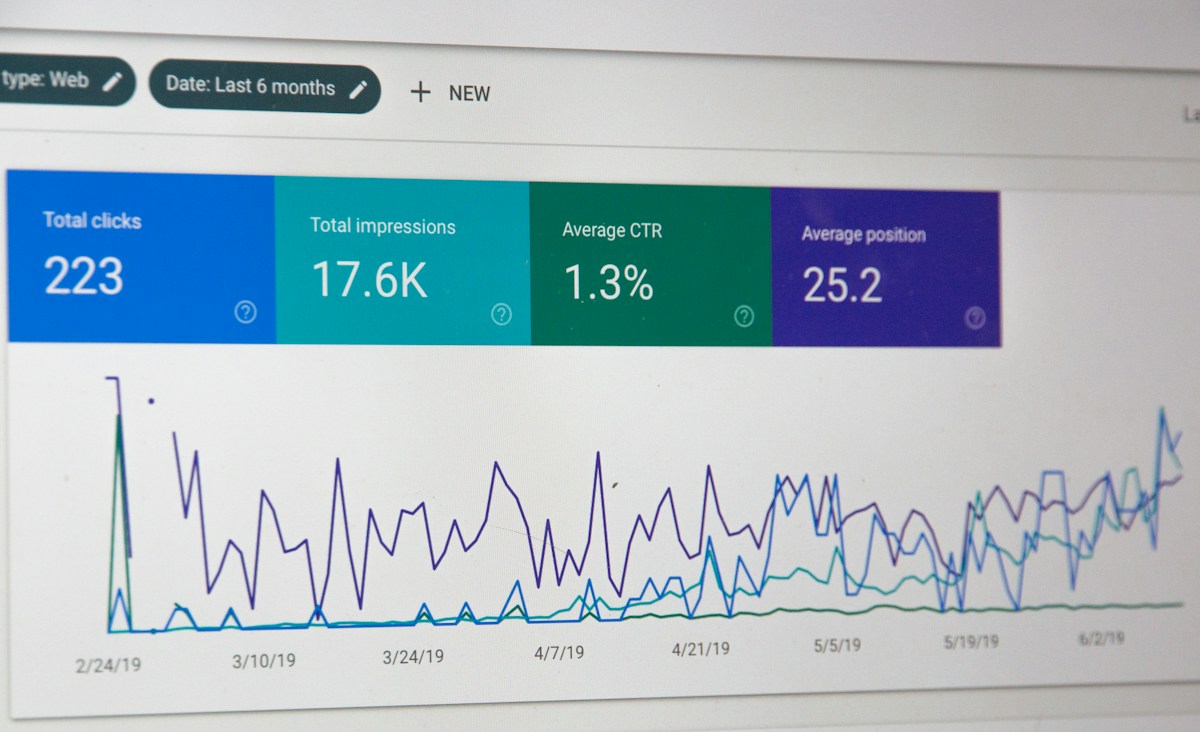
Featured image: Stephen Phillips / Unsplash. Illustrative stock photography, not an image of the cited service.