 由 admin
The next bottleneck in the AI economy may be measured in megawatts rather than model parameters. On November 26, 2026, Reuters reported, citing Nikkei, that Japanese electricity producer JERA was discussing data center projects with major US technology companies, including Anthropic and Meta. The talks should not be mistaken for signed customer contracts. Yet the news offers a useful lens for data businesses: the price of processing a dataset increasingly depends on whether reliable infrastructure is available where it is needed, when it is needed.
Japan is trying to shorten the path from power to computing
JERA’s October 1 announcement provides a concrete backdrop to the latest reporting. It disclosed an agreement with Dell Technologies and RHAELM to develop a repeatable approach to AI infrastructure, starting with a project at JERA’s Chiba power station supported by up to 400 megawatts of power capacity. The partners describe an approach that brings electricity, cooling and computing equipment together earlier in the development process. This is a planned framework, not evidence that a completed facility is already selling capacity to Anthropic or Meta. The economic idea is compelling nonetheless: a data center is valuable only when its power, equipment, network access and customers arrive in a workable sequence.
The price of a dataset includes the work around it
A business buying AI training or evaluation data may pay for collection, annotation, licensing, storage, processing and delivery. Computing infrastructure affects several of these stages. A supplier with a reliable processing window can promise an update schedule with more confidence than one that must search for capacity every week. For a buyer, a cheap raw dataset is not necessarily a bargain if it requires weeks of extra cleaning or misses a model release. A sound comparison starts with the price per accepted output, not the price per raw input or the lowest headline hourly computing rate. That distinction is especially important when the product is a continuing data feed rather than a one-off file.
A simple cost model for a data supplier
Take an illustrative company that processes 100 million records a month. Assume that electricity consumption attributable to its workload is 80 megawatt-hours, its allocated monthly facility and equipment cost is $24,000, and other processing, quality control and licensing costs total $36,000. At an assumed electricity price of $100 per megawatt-hour, total cost is $68,000. If 95 million records pass validation, the cost per million accepted records is approximately $716. If electricity rises to $180 per megawatt-hour while the other assumptions remain unchanged, the total becomes $74,400, or about $783 per million accepted records. These are hypothetical numbers, not electricity tariffs or quotations from JERA. They illustrate that a supplier needs an explicit allocation method for shared infrastructure before it can make reliable pricing commitments.
Reliability can matter more than a discounted tariff
Now suppose the cheaper power scenario suffers delays that reduce monthly accepted volume to 80 million records while its total costs remain at $68,000. Its cost per million accepted records becomes $850. The more expensive but stable scenario in the example would be cheaper per delivered unit. Actual outcomes depend on workload scheduling, energy contracts, utilization and recovery costs. An enterprise buyer should therefore ask suppliers for evidence of completed deliveries, not just advertised processing capacity. A useful contract defines a measurable acceptance criterion, a delivery deadline, the handling of errors and the allocation of any capacity reservation cost. Where the data is time-sensitive, missed delivery may be more costly than the extra electricity itself.
A procurement strategy for buyers in Asia
The November 26 Reuters report also comes alongside reporting about tighter US chip shipment controls and more selective investment across Asia-Pacific, based on Fitch Ratings analysis. A dataset purchaser should treat these developments as supply-chain uncertainty rather than assume that any particular country is about to run out of capacity. Ask for the region of processing, the reason that region is necessary, the backup arrangement and the cost of moving a workload. Verify legal rights for every proposed transfer of data. For a smaller supplier, outsourcing bursts of processing may be more sensible than reserving a large block of infrastructure. For a buyer with predictable volumes and strict deadlines, a reserved allocation can reduce uncertainty, provided the provider can demonstrate delivery and the commitment does not exceed realistic demand.
How to turn the headline into a decision
The most useful market indicators are contracted capacity with credible commissioning dates, utilization by paying customers, measured delivery performance and the proportion of infrastructure costs that can be attributed to a specific data product. Buyers can request both a volume-based quote and an accepted-output quote, then stress-test them against changes in electricity, utilization and rework. Sellers can explain which components are fixed and which vary with delivery rather than hide those assumptions behind a single premium price. Investors should distinguish announced plans from construction, available capacity and recurring revenue. The Japanese infrastructure discussions make the connection between the energy economy and the data economy unusually visible. The winning data business will not necessarily have the cheapest nominal power; it will be one that turns its inputs into dependable, legally usable outputs at a price customers can understand and audit.
Sources
- Reuters, JERA talks, Nov 26, 2026
- JERA, official announcement, Oct 1, 2026
- Reuters, Fitch assessment, Nov 26, 2026
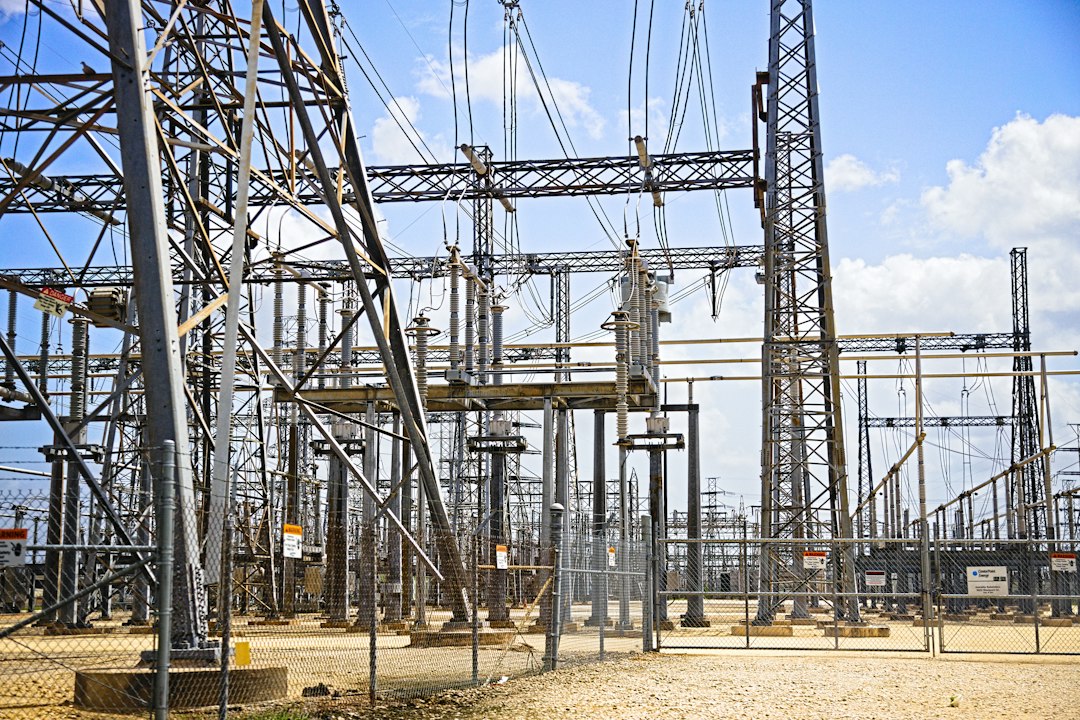
Illustrative cover (not the JERA facility): Sam LaRussa / Unsplash.