 由 admin
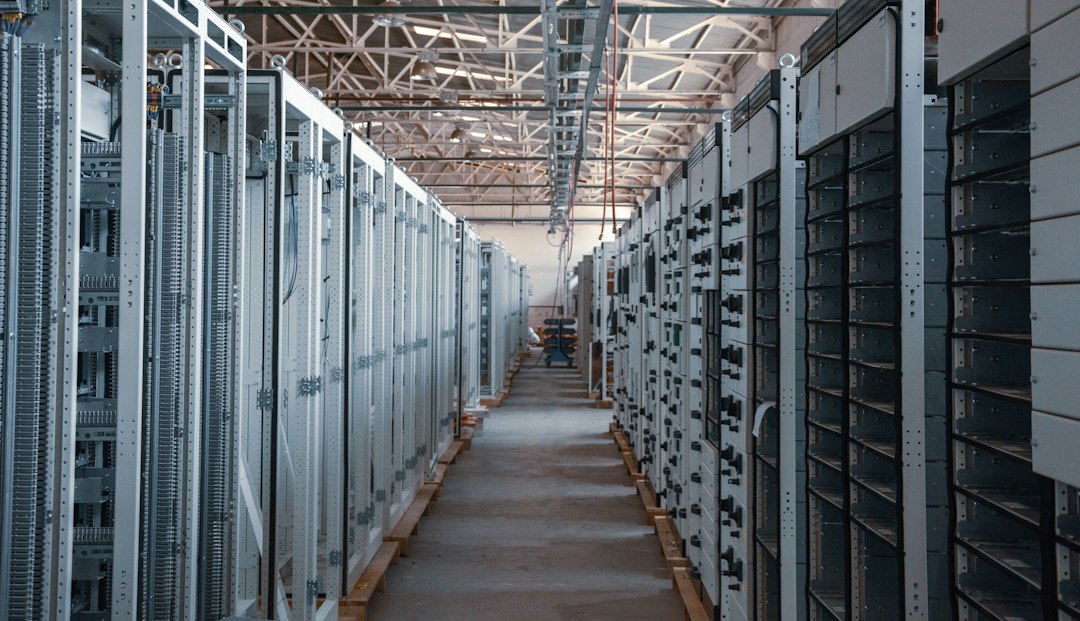
Dell’s latest earnings give data businesses an unusually clear reminder: the infrastructure behind artificial intelligence is becoming a major capital commitment. On November 24, 2026, Dell reported quarterly revenue of $54.9 billion and an AI order backlog of $132.3 billion in its fiscal third-quarter results. Reuters independently reported the same backlog and the company’s increased annual outlook. But these numbers do not tell a small data supplier whether to purchase its own equipment. That decision depends on how much useful work the supplier can actually sell, and how much risk it can afford to carry while demand develops.
The backlog is a demand signal, not a price quotation
A backlog represents booked orders that have yet to be fulfilled. It is not cash already received, and it does not specify the price a particular company will pay for a server. Dell also reports that its infrastructure segment has become an increasingly important part of its business. For a data marketplace, enterprise analytics supplier or synthetic-data producer, the relevant implication is that capacity planning deserves more attention. A vendor should obtain actual quotations with dates, support conditions and delivery commitments instead of treating a stock-market headline as a procurement benchmark. This matters even if the company never buys a GPU: its cloud provider faces similar choices about utilization and inventory. A supplier may therefore experience changing rental terms without owning any physical equipment.
Start with the product your customer actually buys
Imagine a supplier delivering a cleaned and labeled dataset refreshed monthly for ten enterprise clients. Those clients may care about freshness, coverage, permitted use and consistency rather than the number of computing hours consumed. The supplier should estimate resource requirements only after agreeing on these deliverables. Separate preparation work, validation, model inference, storage and export, because they scale differently. A dataset with one million rows can be inexpensive to store yet expensive to verify if each row needs specialist judgment. Similarly, a cheap computing contract will not repair missing legal rights to distribute the underlying data. A sensible infrastructure decision therefore starts from a customer contract and a repeatable delivery pipeline, not from a vendor’s advertised performance figure.
An illustrative break-even model for renting versus owning
Consider an entirely hypothetical capacity unit that costs $18,000 to purchase, with a planned three-year useful life and no assumed resale value. Add $300 per month for housing, power, maintenance and administration. The simplified fixed monthly ownership cost is $800. Assume a comparable rented unit costs $2.50 per productive hour, including the equivalent services. At 160 useful hours, renting costs $400 and ownership costs $800. At 400 hours, renting costs $1,000 and ownership costs $800. Under these assumptions the break-even point is 320 hours monthly. This calculation ignores financing, taxes, setup, outages and residual value; each could move the threshold. The numbers are teaching assumptions, not Dell prices or measured cloud rates. Productive hours must be measured at equivalent quality and throughput, otherwise the comparison is meaningless.
How to turn the cost model into a dataset price
Suppose the same supplier has $2,000 monthly in licensing, validation and customer support costs, in addition to infrastructure. At 160 hours the rental scenario costs $2,400 overall, and the ownership scenario costs $2,800. If eight customers receive equivalent rights and service, the simple average delivery cost is $300 or $350 per customer respectively. A 40 percent target gross margin would imply prices of $500 or about $583, before sales overhead and applicable tax. The correct denominator is the number of paying customers served under the agreed scope, not the number of files generated. A buyer requesting exclusive rights or a customized refresh may deserve a separate price because the work cannot automatically be shared among the other seven customers. A vendor should document that distinction in its quotation.
A practical purchasing decision for uncertain demand
Build three demand scenarios for the next twelve months: a conservative case based on signed contracts, a central case using qualified opportunities and a high case that remains explicitly speculative. Estimate the capacity each requires. Renting can preserve flexibility when contracts have short cancellation periods; owning may be attractive when predictable work keeps the equipment busy. A hybrid approach can dedicate a baseline system to recurring deliveries and rent additional capacity for peaks. Check delivery lead times, backup arrangements and whether sensitive client information must remain within a particular environment. Avoid committing to a long infrastructure contract simply because an equipment vendor reports record orders. The most valuable metric is contribution margin on completed customer deliveries after realistic service costs.
What data suppliers should monitor next
Record actual computing hours, job completion rates, validation exceptions, storage growth and revenue for each product every month. Compare that evidence with the assumptions above before revising prices or buying equipment. If a customer requests a cheaper dataset, ask whether a lower refresh frequency or narrower coverage would meet the need, rather than silently weakening quality. When purchasing infrastructure, retain quotations and contracts so finance teams can distinguish committed costs from forecast costs. Dell’s report is useful context for understanding industry investment, but a sustainable data business makes its decision on contracted demand, reliable delivery and cash runway. The firm that understands its own unit economics can benefit from cheaper capacity wherever it becomes available, without betting its entire budget on a headline.
Sources
- Dell Technologies, fiscal Q3 2027 financial results, November 24, 2026
- Reuters, Dell lifts annual forecasts, November 24, 2026
Cover image: İsmail Enes Ayhan / Unsplash (illustrative).